Novel viruses · disease mechanisms · virology

Focus on understanding disease mechanisms

The Janowski Lab studies newly recognized viruses to understand how they infect human tissues and cause disease. Current work centers on astrovirus VA1, viral encephalitis, cardiovascular infection, and conserved viral RNA biology.

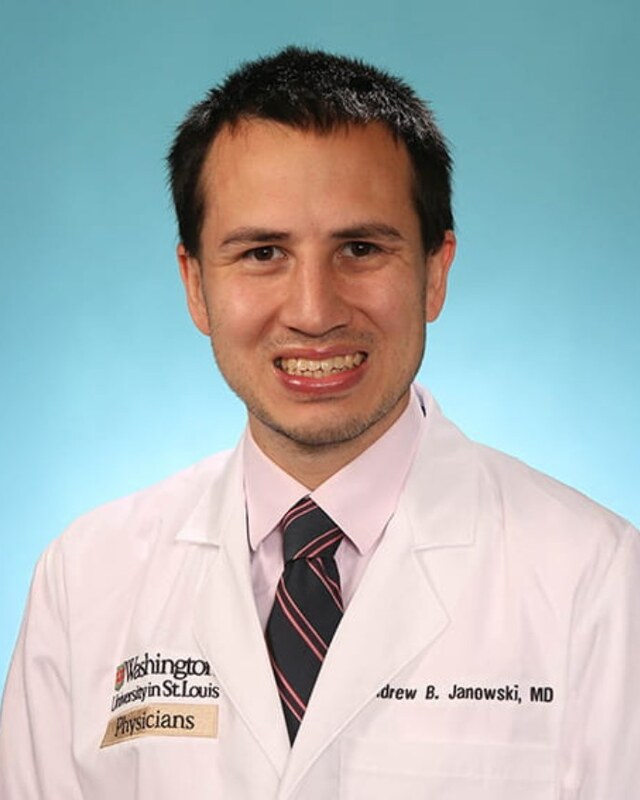
Andrew B. Janowski, MD, MSCI
Andrew B. Janowski, MD, MSCI Principal Investigator
Research focusNovel viruses & viral pathogenesis
Clinical fieldPediatric Infectious Diseases
InstitutionWashington University in St. Louis

Research

Current projects

Our work uses virology, cell culture, organoids, animal models, molecular biology, and serology to study how emerging and understudied viruses interact with host tissues.

01

How does astrovirus VA1 cause encephalitis?

Astrovirus VA1 is the most frequently identified astrovirus associated with human encephalitis. The lab was the first to isolate and propagate VA1 in cell culture and has developed systems to study its pathogenesis in the central nervous system. Current work examines infection of astrocytes, neuronal injury, and signaling pathways using brain organoid models.

02

Why does astrovirus VA1 infect the heart?

A murine model of VA1 infection revealed strong viral replication in heart tissue and myocarditis. The laboratory is investigating how the virus causes cardiac injury and which cell types support infection, broadening the understanding of astrovirus disease beyond the gastrointestinal and central nervous systems.

03

What does the stem-loop II motif do?

The stem-loop II motif (s2m) is a conserved RNA structure found in several viral families. The lab uses reverse genetics to study why this element is important for astrovirus replication and why its function differs among viruses, including SARS-CoV-2.

People

Andrew Janowski, MD, MSCI

Principal Investigator

Andrew Janowski grew up in Middleton, Wisconsin, and graduated from Middleton High School and the University of Wisconsin–Madison. During his undergraduate studies, he developed an interest in research while studying the protein Axotrophin/March7 and later completed medical school at the University of Wisconsin with research honors.

He completed pediatric residency at Children’s Hospital of Pittsburgh and moved to St. Louis in 2013 for fellowship training in Pediatric Infectious Diseases at Washington University School of Medicine. During fellowship, he established a virology research program under the mentorship of David Wang, PhD.

Janowski and Wang were the first to isolate and propagate astrovirus VA1 in cell culture. The Janowski Lab now focuses on the discovery and characterization of novel viruses and the mechanisms by which viral infections cause disease.

Appointments
Assistant Professor of Pediatrics, Infectious Diseases
Assistant Professor of Molecular Microbiology
Publications

Selected work

Full publication list ↗

For students

Learning from active research

Students interested in virology can use the lab’s projects as examples of how clinical observations become experimental questions. The work connects patient disease, cell biology, viral genetics, organoid models, animal models, and primary literature.

Start with a biological questionAsk why a virus infects one tissue or cell type and not another.
Follow the evidenceCompare what cell culture, organoids, animal models, and patient observations can show.
Read the literatureUse methods, figures, and results to understand how scientific conclusions are built.

Contact

Andrew B. Janowski, MD, MSCI

For research, student, and professional correspondence.

Andrew Janowski Lab
Department of Pediatrics | Infectious Diseases
MSC 8208-4-10
WashU Medicine
660 South Euclid Avenue
St. Louis, MO 63110 Lab: 314-273-4715 · Fax: 314-286-2895